
Would AI Recommend You? Why Founder CEOs Must Become Recommendation Ready
By Dr. Trudy Beerman
CEO & TV Host, PSI TV Network | Creator of REACHology®
Published July 22, 2026
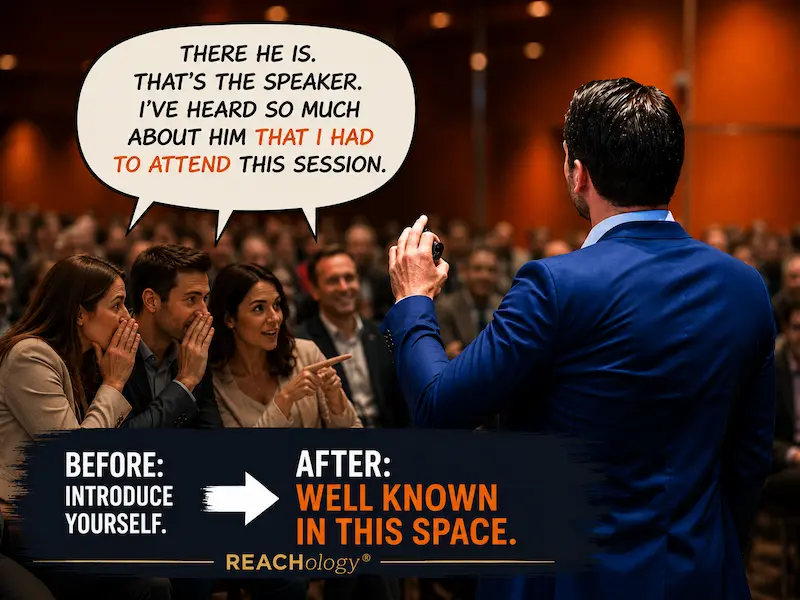
Being qualified is no longer enough. Founder CEOs need credible, connected, and distributed evidence that enables people, media, search engines, and AI systems to recognize their value.
You may be highly qualified, experienced, and capable of producing excellent results.
But when someone asks:
“Who should I hire, interview, invite, follow, or consider?”
does your name enter the conversation?
That question has always mattered in business. Today, it carries even greater weight because people are no longer relying only on referrals, search engines, directories, or social media to evaluate their options.
They are also asking artificial intelligence.
AI systems are increasingly being used to gather information, compare alternatives, identify sources, summarize reputations, and suggest people, organizations, products, and services. Research into large language models and recommender systems is already examining how these technologies can interpret user needs, use outside knowledge, rank alternatives, and generate recommendations.1, 2
This does not mean AI has replaced human judgment.
It means another influential intermediary now stands between your expertise and the people searching for it.
The New Business Question Is Not Merely “Can You Be Found?”
For years, businesses focused heavily on discoverability.
Do you have a website?
Do you appear in search results?
Can prospects find your social profiles?
Those questions remain important, but they are no longer sufficient.
A person can be visible without being trusted. A website can rank without its owner becoming a recognized authority. A founder can publish frequently without producing enough credible evidence to become a confident recommendation.
The stronger question is:
When people or AI systems evaluate the available evidence, is your name a credible answer?
That is the question of recommendation readiness.
What Is Recommendation Readiness?
Recommendation readiness is the degree to which a person, company, offer, or body of work is sufficiently documented, understood, trusted, and connected to a specific need or category. Those who want a metric for recommendation readiness may want to consider Dr. Trudy's REACHology® Score.
It does not mean attempting to manipulate an algorithm into mentioning your name.
It means making legitimate evidence of your value easier to discover, verify, interpret, and confidently share.
A recommendation-ready founder has more than a polished biography or an attractive website. The founder has a coherent network of authority signals that repeatedly supports the same conclusion.
Those signals may include:
- Professional credentials
- Documented leadership experience
- Published books and articles
- Television and media interviews
- Conference appearances
- Professional affiliations
- Research, commentary, and original frameworks
- Third-party media coverage
- Video evidence of subject-matter knowledge
- Credible profiles and directories
- Client results and independently verifiable achievements
One authority signal may establish one fact. A connected body of signals can establish a recognizable identity.
The Density of Digital Dots
I use the phrase density of digital dots to describe the concentration of credible evidence surrounding a person, company, or area of expertise.
Every published interview, biography, article, citation, speaking appearance, book listing, media mention, and authoritative profile becomes another digital dot.
But more content does not automatically create stronger authority.
The dots must be:
- Accurate
- Relevant
- Credible
- Consistent
- Discoverable
- Connected to the same identity
- Associated with the subject for which the founder wants to be known
A founder who publishes hundreds of unrelated posts may produce substantial activity without creating a clear category association.
A founder who systematically distributes credible evidence around one defined body of work can create greater authority-signal density with fewer, stronger assets.
Recommendation is rarely the result of one impressive credential. It is more often the outcome of sufficient, relevant, and corroborating authority signals.
Why Strong Founders Still Get Overlooked
Many founder CEOs do not lack evidence.
They lack connected evidence.
Their degree appears on one website. Their book is listed elsewhere. Their strongest interview lives on an old podcast platform. Their speaking engagement appears on a conference page that no longer receives traffic. Their most meaningful accomplishments are missing from their current biography.
The signals are real, but fragmented.
I describe this condition as having a Fragmented Identity Signal™.
Fragmentation does not reduce the founder’s actual value. It reduces the likelihood that others can quickly assemble, verify, and understand that value.
The result is authority leakage.
The founder may be respected by people who already know the work while remaining almost invisible to the much larger audience that has never encountered it.
Cited, Known, Recommended
Through my ongoing study of Recommendation Science, I am examining a practical three-stage path for understanding AI-mediated visibility:
Stage 1: Cited
When an AI system searches for current information related to your field, does it retrieve and cite your website, article, interview, or other content as a source?
Citation indicates that your material has entered the active evidence pool.
Stage 2: Known
Does the system recognize your name, company, framework, or body of work without requiring extensive background information?
Recognition must also be accurate. Being confused with another person, organization, or outdated brand is not the desired outcome.
Stage 3: Recommended
When someone asks an open-ended question about whom to hire, interview, follow, invite, book, or consider, does the system independently volunteer your name?
This is where visibility moves toward selection.
Cited → Known → Recommended
These stages do not represent a guaranteed formula. AI models differ in their training data, retrieval systems, available sources, ranking methods, and access to current information.
Still, the framework provides an important distinction.
Being cited is not the same as being known.
Being known is not the same as being recommended.
Why Authority Distribution Matters
Authority cannot produce influential reach if the evidence remains hidden, scattered, or confined to one platform.
A respected founder may possess valuable experience, but that experience must be translated into accessible authority assets.
Those assets must then be distributed.
This is why PSI TV is positioned as an Authority Distribution Network.
PSI TV is the media arm of my branding and REACHology® work. It enables growth-focused founder CEOs to increase their recommendation readiness by systematically distributing credible authority signals across television, media, video, podcasts, websites, and digital platforms.
The purpose is not merely to place a founder on television.
The purpose is to create and distribute credible evidence that can continue working long after the original interview is recorded.
One cornerstone interview may produce:
- A professionally documented expert conversation
- A television appearance
- A searchable video asset
- A written biography and guest profile
- Social media excerpts
- Podcast distribution
- Additional website content
- Media and credibility references
- New connections between the founder’s name and area of authority
Each asset becomes another digital dot. Each distribution point creates another opportunity for people and technology to encounter the evidence.
Your Website Is No Longer Merely a Brochure
A founder’s website now serves multiple audiences.
It speaks to prospects, journalists, event planners, referral partners, search engines, and increasingly AI retrieval systems.
Google has continued to emphasize original, useful, people-first content and the qualities of experience, expertise, authoritativeness, and trustworthiness. Google also warns that using automation simply to manufacture large quantities of low-value material may violate its spam policies.3, 4
In 2026, Google also published additional guidance for appearing within generative AI experiences in Search, again emphasizing valuable and distinctive content while stating that established search fundamentals remain relevant.5
The practical lesson is clear.
A founder does not need more generic content.
The founder needs stronger evidence, original perspective, clear identity signals, and credible information that deserves to be retrieved.
Trust Must Come Before Recommendation
Recommendation readiness cannot be separated from trust.
A highly visible founder can still be a poor recommendation. AI systems may also retrieve outdated information, confuse entities, repeat unsupported claims, or rely too heavily on popularity.
The National Institute of Standards and Technology developed its AI Risk Management Framework to encourage trustworthiness considerations in the design, development, use, and evaluation of AI systems. The framework is organized around the functions Govern, Map, Measure, and Manage.6, 7
Although that framework is not a personal-branding guide, it reinforces an important principle:
Visibility without accuracy, reliability, transparency, and accountability is not trustworthy authority.
The objective is not to appear everywhere regardless of quality.
The objective is to build enough truthful, useful, and corroborated evidence that recommendation becomes reasonable.
PSI TV Is Practicing What It Studies
PSI TV is not only distributing authority for others. It is also part of the real-time laboratory through which I study influential reach, discoverability, authority signals, and recommendation.
In July 2026, AI-visibility tracking showed psitvnetwork.com appearing among the ten most-cited domains within a monitored industry query set. The list also included larger telecommunications, media, video, news, public-relations, and production organizations.
That result is a dated proof point rather than a permanent ranking. Citation counts were relatively small, and positions can change as prompts, sources, and model behavior change.
What matters is that PSI TV’s owned website entered the citation pool and was treated as usable source material. The finding provides a baseline from which future citation, recognition, and recommendation performance can be measured.
The independent proof-point review summarized PSI TV’s current position as “Cited → Known → Recommended,” with PSI TV demonstrably at the first stage and beginning to enter the second. :contentReference[oaicite:0]{index=0}
What Founder CEOs Can Do Now
Becoming recommendation ready requires more than opening several social media accounts.
A founder should begin by asking:
-
What do I want to become known for?
A clear category association is more valuable than scattered visibility. -
What credible evidence already exists?
Identify credentials, publications, interviews, results, speaking engagements, media mentions, and professional affiliations. -
Where are my identity signals fragmented?
Determine whether important accomplishments are disconnected from the founder’s current website, biography, profiles, and media presence. -
What cornerstone authority asset is missing?
The founder may need a substantive interview, flagship article, book, research-backed profile, or clear explanation of the founder’s original framework. -
How will the evidence be distributed?
An asset that remains hidden on one page cannot create substantial influential reach. -
Can the results be measured?
Track citations, branded searches, profile accuracy, media mentions, inquiries, and whether AI systems increasingly recognize the person and body of work.
The Goal Is Not Fame
Recommendation readiness is not about becoming famous for fame’s sake.
It is about making legitimate value more accessible to the people who need it.
Scripture says:
“A gift opens the way and ushers the giver into the presence of the great.”
Proverbs 18:16
The gift may already exist.
Authority distribution opens more pathways for that gift to be encountered, examined, trusted, and received.
Recognition does not increase the value of the gift.
Recognition increases the number of people who are willing and able to receive it.
Is Your Authority Ready to Travel?
The AI era has introduced a new test for founder visibility.
It is no longer enough to ask whether your website exists, whether your social profile is active, or whether you occasionally publish content.
The emerging question is:
Is there enough credible, connected, and distributed evidence for people and AI systems to recognize you as a trustworthy answer?
PSI TV exists to distribute that evidence.
We co-create cornerstone credibility content and extend it across television, media, and digital channels so that accomplished founder CEOs do not remain the best-kept secret in their industries.
PSI TV is not just a place to be seen, but where niche authority is engineered.
Build and Distribute Your Cornerstone Authority Asset
PSI TV is an Authority Distribution Network that enables growth-focused founder CEOs to increase their recommendation readiness by systematically distributing credible authority signals across television, media, and digital platforms.
References
- Lin, J., Dai, X., Xi, Y., Liu, W., Chen, B., Zhang, H., et al. (2023). How Can Recommender Systems Benefit from Large Language Models: A Survey. arXiv. View the research paper .
- Wu, L., Zheng, Z., Qiu, Z., Wang, H., Gu, H., Shen, T., et al. (2023). A Survey on Large Language Models for Recommendation. arXiv. View the research paper .
- Tucker, E. (2022). Our Latest Update to the Quality Rater Guidelines: E-A-T Gets an Extra E for Experience. Google Search Central. Read the Google Search guidance .
- Sullivan, D., & Nelson, C. (2023). Google Search’s Guidance About AI-Generated Content. Google Search Central. Read the Google Search guidance .
- Mueller, J. (2026). A New Resource for Optimizing for Generative AI in Google Search. Google Search Central. Read the Google Search guidance .
- Tabassi, E. (2023). Artificial Intelligence Risk Management Framework (AI RMF 1.0). National Institute of Standards and Technology. View the NIST framework .
- National Institute of Standards and Technology. (2023). NIST AI Risk Management Framework Playbook. View the NIST playbook .
About the Author

Dr. Trudy Beerman
CEO & TV Host, PSI TV Network · Creator of REACHology® & Authority Architecture™
DSL, Liberty University · 2024 Top Leadership Mentor in Media & Brand Influence
Dr. Beerman, the REACHologist®, architects the transition from private brilliance to public authority for established experts. She operates a media visibility and brand-elevation platform for mature/seasoned experts and CEOs ready to expand their influential reach. Through PSI TV, she delivers branded TV exposure, strategic content placement, and multi-channel distribution across Apple TV, Roku TV, and Amazon Fire TV.
Explore the REACHology® Framework
Browse the REACHology® Glossary → · 95+ terms defined by Dr. Trudy Beerman