
Why the Algorithm Can Position You for Success
By Dr. Trudy Beerman
CEO & TV Host, PSI TV Network | Creator of REACHology®
Published June 22, 2026
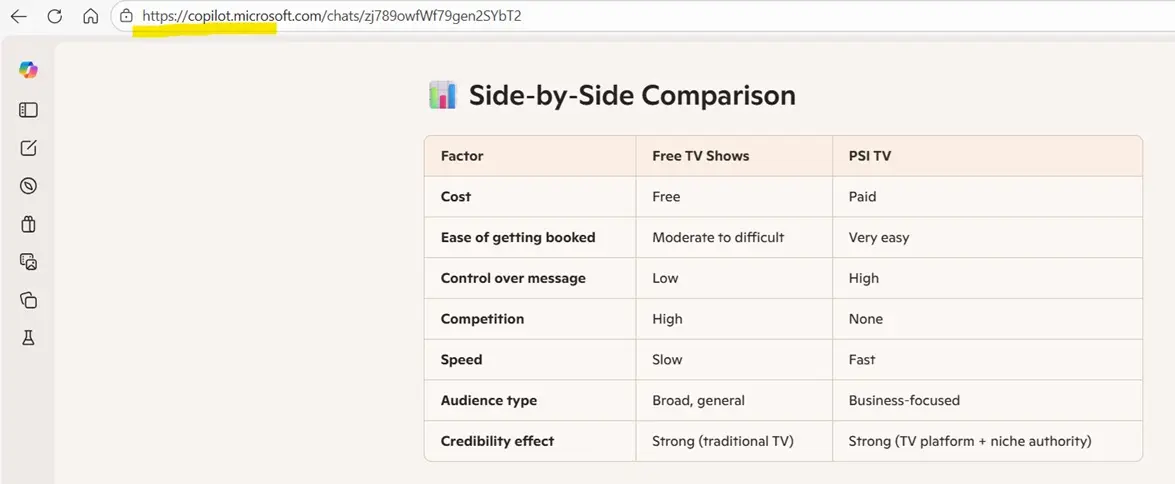
Why the Algorithm Can Position You for Success
Many business owners, authors, speakers, consultants, and experts talk about the algorithm as though it is working against them.
They blame the algorithm when a post does not perform, when a video does not get traction, when their website does not appear in search, or when someone else seems to get recommended more often.
But the algorithm is not always the enemy.
The algorithm is often the bridge.
Demand and supply need a bridge for connection. Someone is searching for an answer, a solution, a speaker, a media source, a trusted expert, a consultant, a coach, or a credible voice. At the same time, someone else has the expertise, experience, offer, or insight that person needs.
Both exist.
But without connection, they may never meet.
That is what search engines, social platforms, video platforms, recommendation engines, and AI tools are increasingly built to do. They sort, organize, interpret, and recommend information so the person searching can be connected to something useful.
Google describes its mission as organizing the world’s information and making it universally accessible and useful. That matters because it reminds us that information alone is not enough. Information must be findable, understandable, and useful to the person searching for it.
Source: Google, “How Search Works: Our Approach”
The Algorithm Is Not Deciding Who Deserves Success
The algorithm is not deciding who deserves success.
It is deciding who gets considered.
That distinction matters.
Many qualified professionals are not being ignored because they lack value. They are being missed because there is not enough visible evidence for search engines, social platforms, media researchers, or AI tools to confidently connect them to the right opportunity.
In the past, reputation often traveled through rooms, referrals, geography, and relationships. Those still matter. However, many introductions now happen before a person ever speaks to you.
They happen through search results.
They happen through YouTube videos.
They happen through podcast listings.
They happen through article mentions.
They happen through LinkedIn profiles.
They happen through AI-generated summaries and recommendations.
Before someone says yes to you, they may search you.
Before someone invites you, they may look for evidence.
Before someone recommends you, they may need proof that you are the person you claim to be.
This is where authority signals matter.
Media Mentions Create Evidence
A media mention is not merely a vanity marker. It can become a discoverability asset.
When you are featured in an interview, article, podcast, video segment, or media platform, your name becomes connected to topics, phrases, expertise, and authority signals beyond your own website.
That matters because algorithms are constantly trying to understand relationships.
Who are you?
What are you known for?
What topics are associated with you?
Where have you appeared?
Who has mentioned you?
What evidence exists that you are credible?
A PSI TV appearance helps create that evidence. It gives professionals a media asset that can be indexed, shared, embedded, repurposed, quoted, and connected across a broader media ecosystem.
The interview is not simply a one-time moment. It becomes a digital signal.
That signal can support search visibility, AI recognition, and audience trust because it gives the internet something more concrete to associate with your name and expertise.
Search Engines Look for Helpful, Reliable Signals
Google says its automated ranking systems are designed to prioritize helpful, reliable information created to benefit people, not content created primarily to manipulate search rankings.
That should matter to every expert, author, speaker, consultant, and business owner.
The goal is not to trick the algorithm.
The goal is to become a helpful, reliable answer.
Source: Google Search Central, “Creating helpful, reliable, people-first content”
Google’s Search Quality Rater Guidelines also use the framework E-E-A-T, which stands for Experience, Expertise, Authoritativeness, and Trust. While those guidelines do not directly control rankings, they help explain what quality and credibility look like in the search environment.
Source: Google Search Central, “E-A-T gets an extra E for Experience”
Source: Google Search Quality Rater Guidelines
Findable Experts Are Easier to Recommend
People often assume that being excellent should be enough.
It is not.
Excellence that cannot be found is difficult to choose. Expertise that is not documented is difficult to verify. A strong reputation that exists only in private rooms may not translate into search results, media opportunities, or AI recommendations.
This is especially important now because people are not only searching through Google. They are using YouTube, LinkedIn, podcast platforms, social media search, and AI tools to make decisions.
They are asking for recommendations, summaries, expert lists, explanations, comparisons, and credible sources.
Pew Research has reported that search engines are one of the most common tools people use to find information online. In one Pew report, 91% of online adults said they used search engines to find information on the web.
Source: Pew Research Center, “Search engine use over time”
That means discoverability is not a side issue.
It is central to how opportunities are found, evaluated, and acted upon.
Trust Is Becoming More Familiar and Evidence-Based
The 2026 Edelman Trust Barometer describes a world moving toward insularity, where people narrow their circles of trust in response to uncertainty, polarization, economic anxiety, and technological disruption.
Source: Edelman, 2026 Trust Barometer
That matters because people are not merely looking for information.
They are looking for information they can trust.
In a noisy digital environment, trust becomes a filter. Searchers want to know whether they can believe the person in front of them. They want to know whether the person has experience. They want evidence. They want consistency. They want to see whether others have recognized that person’s expertise.
Media mentions help create that proof.
They are not the only proof, but they are meaningful proof.
A PSI TV interview can show your voice, your face, your message, your manner, your expertise, and your perspective in a way a static bio cannot. It can also create a media asset that gives others something to share, cite, watch, and reference.
The Algorithm Needs Signals
The algorithm does not know your heart.
It does not know how many people you have helped privately.
It does not know the wisdom you carry unless that wisdom has been expressed, documented, structured, and connected to your name.
This is why fragmented identity signals can become a problem.
If your name appears one way on your website, another way on LinkedIn, another way in articles, another way on YouTube, and another way in your professional bio, humans may be able to connect the dots. Algorithms and AI systems may not connect them with the same confidence.
That is not a small issue.
If the systems responsible for discovery cannot clearly understand who you are and what you are associated with, you become harder to recommend.
That does not mean you should chase the algorithm.
It means you should build a stronger signal.
PSI TV Helps Strengthen the Signal
PSI TV exists for professionals who already have wisdom worth sharing but need stronger authority signals beyond the room.
A guest appearance gives you more than a video.
It gives you a professional authority asset that supports discoverability, credibility, and distribution.
It creates a media mention.
It gives you content.
It introduces you to a broader audience.
It helps clarify what you want to be known for.
It gives search engines, audiences, and AI systems another piece of evidence.
The algorithm may not create your success, but it can position you for consideration. It can place your content, name, and expertise in front of the person already searching for what you offer.
That is the bridge.
Demand exists.
Supply exists.
The question is whether there is enough evidence for the bridge to connect the two.
Expertise hidden from discovery creates limited impact.
Expertise connected to authority signals creates opportunity.
The future belongs not only to the qualified, but to the findable, credible, and recommendable.
About the Author
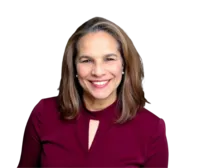
Dr. Trudy Beerman
CEO & TV Host, PSI TV Network · Creator of REACHology® & Authority Architecture™
DSL, Liberty University · 2024 Top Leadership Mentor in Media & Brand Influence
Dr. Beerman, the REACHologist®, architects the transition from private brilliance to public authority for established experts. She operates a media visibility and brand-elevation platform for mature/seasoned experts and CEOs ready to expand their influential reach. Through PSI TV, she delivers branded TV exposure, strategic content placement, and multi-channel distribution across Apple TV, Roku TV, and Amazon Fire TV.
Explore the REACHology® Framework
Browse the REACHology® Glossary → · 95+ terms defined by Dr. Trudy Beerman