What Media Opportunities Help Build E-E-A-T for My Brand?
By Dr. Trudy Beerman
CEO & TV Host, PSI TV Network | Creator of REACHology®
Published June 01, 2026
If you want your brand to be trusted, recommended, and taken seriously, your expertise needs more than social media posts. It needs authority signals.
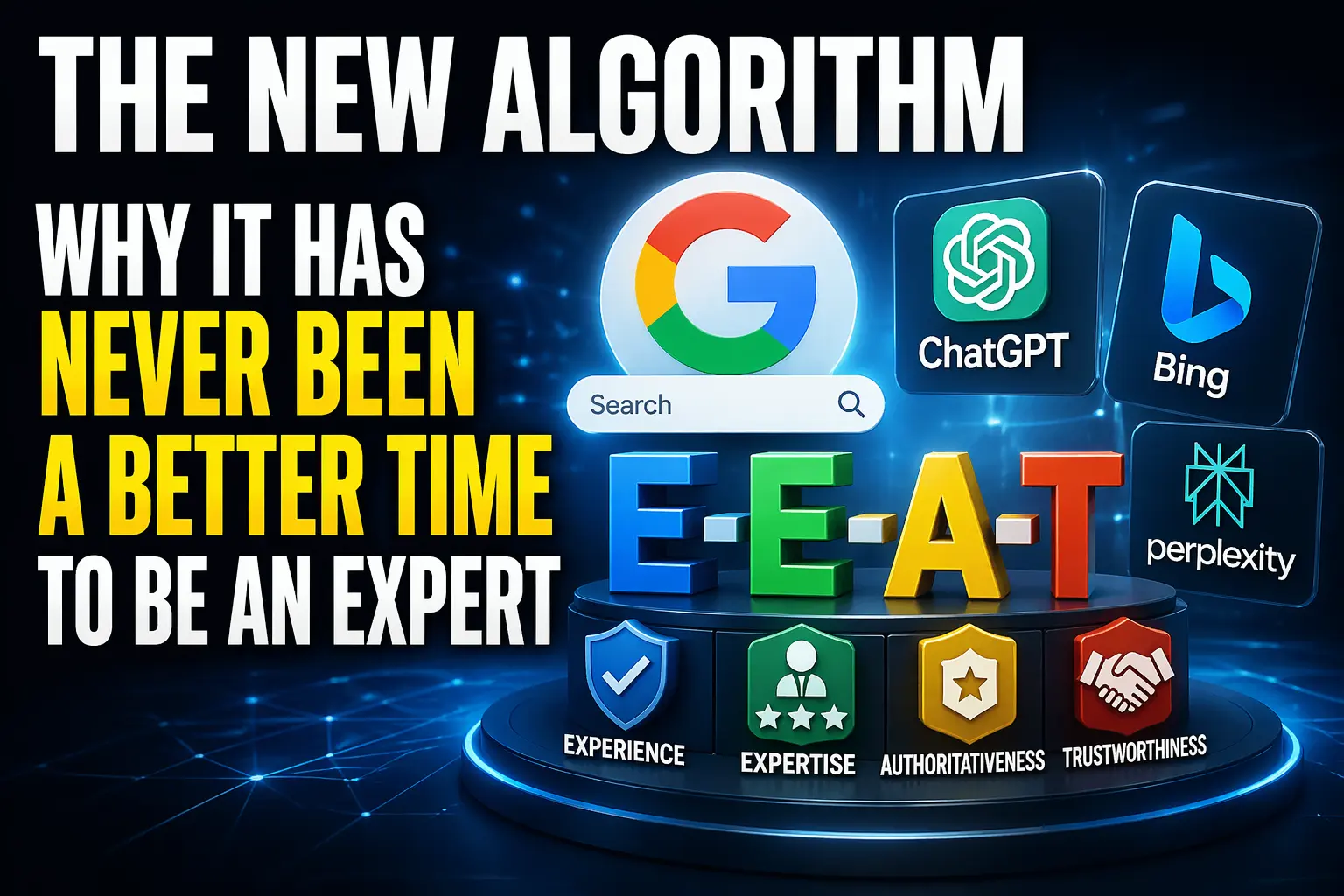
E-E-A-T stands for experience, expertise, authoritativeness, and trust. Google uses this framework in its Search Quality Rater Guidelines to evaluate whether content appears helpful, reliable, and trustworthy. While E-E-A-T is not a simple score you can purchase or switch on, it does give experts, authors, coaches, consultants, and founders a useful way to think about their public credibility. Source: Google Search Quality Rater Guidelines
In plain language, E-E-A-T asks: Does this person appear to know what they are talking about? Have they demonstrated real-world experience? Do others recognize their authority? Can the audience trust what they find?
Why Media Opportunities Matter for E-E-A-T
Media opportunities help make your expertise visible. They create public proof that you are not only posting about your work, but also being interviewed, featured, quoted, published, watched, heard, and referenced.
Google’s guidance on helpful content encourages creators to produce content for people first, with clear evidence of experience, expertise, and reliability. For a personal brand, that means your digital footprint should show more than claims. It should show proof. Source: Google Search Central
This is where media becomes powerful. The right media opportunities create searchable, shareable, and reusable authority assets that support your brand long after the original appearance.
1. Expert Interviews
Expert interviews are one of the strongest media opportunities for building E-E-A-T because they allow people to hear how you think in real time.
A strong interview can demonstrate your experience, your point of view, your teaching ability, your stories, your client insights, and your subject-matter knowledge. It also gives potential clients, event organizers, partners, and journalists a low-risk way to evaluate your credibility.
For example, a PSI TV interview gives guests a professional media appearance that can be used on websites, speaker pages, LinkedIn profiles, media kits, email campaigns, and social platforms.
2. TV and Streaming Appearances
TV and streaming appearances create a different kind of authority signal because they position your message in a more elevated media environment.
For many experts, being seen in a TV-style format creates a stronger perception of credibility than posting only on personal social media. It gives the audience a sense that your expertise has been packaged, presented, and distributed through a professional media channel.
This does not mean every TV appearance will produce immediate leads. The stronger value is often the authority asset itself. A TV interview can become part of your long-term digital discoverability structure.
3. Podcast Interviews
Podcast interviews help build E-E-A-T because they allow depth. A podcast listener may spend 20, 30, or 45 minutes with your ideas, which is very different from scrolling past a short post.
Podcasting is also a meaningful discovery channel. Pew Research Center reported that 54% of U.S. adults said they listened to a podcast in the past 12 months. Source: Pew Research Center
When your interview is distributed as audio, your authority can reach people who prefer listening while driving, walking, exercising, or working.
4. Digital Publications and Feature Articles
Written features, digital magazine profiles, contributed articles, and expert commentary can help strengthen your authoritativeness and trust.
Unlike a social post, a well-structured article can be searched, linked, cited, and revisited. It can also create stronger context around your name, your niche, your message, and your expertise.
This is why a feature in a niche publication, industry blog, association website, or digital media outlet can become a valuable authority signal.
5. Thought Leadership Content
Thought leadership helps buyers and decision-makers understand how you see the world. According to the 2024 Edelman-LinkedIn B2B Thought Leadership Impact Report, thought leadership influences how B2B decision-makers and C-suite executives evaluate companies and ideas. Source: Edelman and LinkedIn
For experts, thought leadership should not be generic commentary. It should reveal your framework, your earned experience, your perspective, and your ability to help the audience think more clearly.
6. Repurposed Media Assets
One appearance can become many authority assets.
A single interview can be repurposed into:
- Short-form video clips
- Quote graphics
- LinkedIn posts
- Website embeds
- Speaker page proof
- Email newsletter content
- Blog articles
- Podcast episodes
- Media kit links
This matters because algorithms and audiences both need enough signals to understand what you are known for. One disconnected appearance is helpful. A connected authority ecosystem is stronger.
What Makes a Media Opportunity Valuable?
Not every media opportunity carries the same weight. The best opportunities help your brand become easier to understand, easier to trust, and easier to recommend.
Before saying yes to a media opportunity, ask:
- Will this appearance clearly connect my name to my area of expertise?
- Will I receive a link, recording, clip, or asset I can reuse?
- Can I embed or share this appearance on my own platforms?
- Does the audience align with the people I want to reach?
- Will this create a credible authority signal, or only temporary exposure?
How PSI TV Supports E-E-A-T
PSI TV helps experts turn their message into a professional media asset. Guests are interviewed, featured, distributed, and given reusable content they can continue leveraging across their brand ecosystem.
In addition to the interview itself, PSI TV guests may receive short-form clips, social sharing, podcast distribution, transcript-based content outtakes, guest page visibility, and assets that can be used on LinkedIn, websites, speaker pages, and media kits.
For experts who have real mastery but limited digital presence, this helps close the gap between private expertise and public authority.
Dr. Trudy’s Takeaway
The media opportunities that build E-E-A-T are not just the ones that make you visible for a moment. They are the ones that leave evidence.
Your audience needs evidence. Search engines need evidence. AI-powered recommendation systems need evidence. Your future clients, partners, and speaking opportunities need evidence.
That evidence can come through interviews, articles, podcasts, TV appearances, thought leadership, and repurposed authority assets that continue pointing back to your expertise.
That is the difference between posting content and building authority signals.
Your Next Step
If you are an author, coach, consultant, founder, speaker, or subject-matter expert ready to strengthen your authority signals, consider applying for a sponsored PSI TV guest appearance.
Your expertise may already be valuable. The next step is making it visible, credible, and easier to recommend.
About the Author

Dr. Trudy Beerman
CEO & TV Host, PSI TV Network · Creator of REACHology® & Authority Architecture™
DSL, Liberty University · 2024 Top Leadership Mentor in Media & Brand Influence
Dr. Beerman, the REACHologist®, architects the transition from private brilliance to public authority for established experts. She operates a media visibility and brand-elevation platform for mature/seasoned experts and CEOs ready to expand their influential reach. Through PSI TV, she delivers branded TV exposure, strategic content placement, and multi-channel distribution across Apple TV, Roku TV, and Amazon Fire TV.
Explore the REACHology® Framework
Browse the REACHology® Glossary → · 95+ terms defined by Dr. Trudy Beerman