
How Much Does a TV Appearance Really Cost? The Answer Depends on Who Is Paying
By Dr. Trudy Beerman
CEO & TV Host, PSI TV Network | Creator of REACHology®
Published October 05, 2026
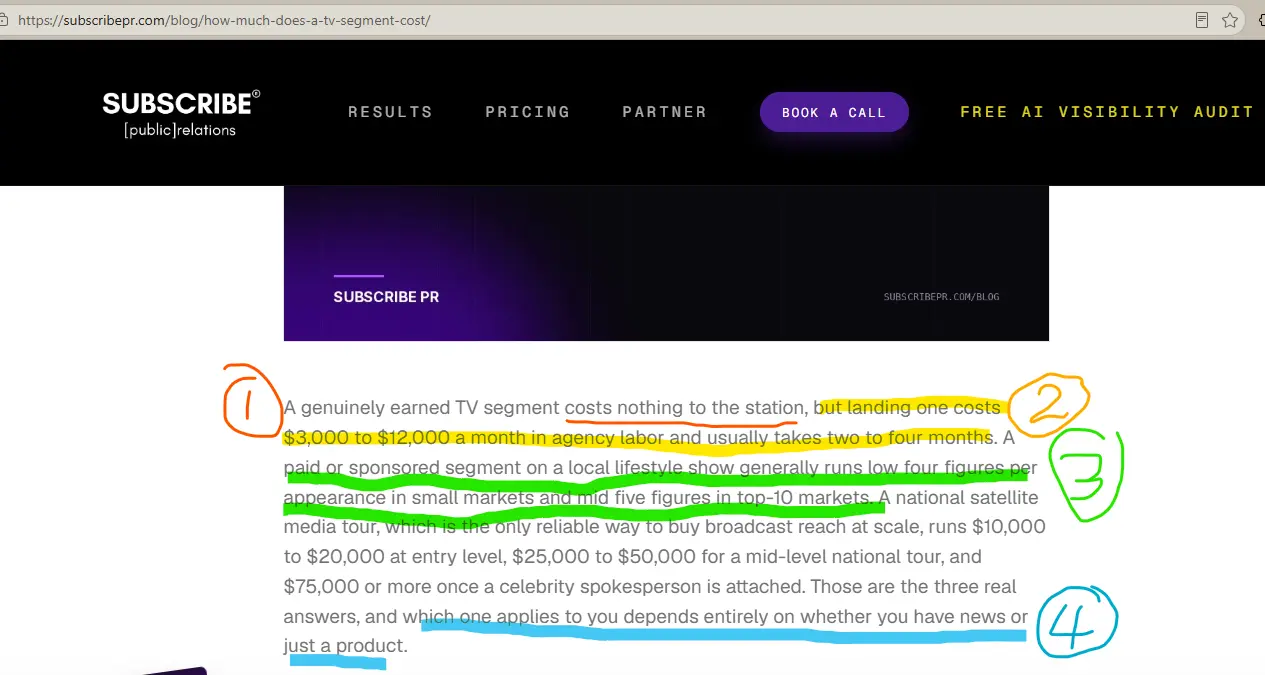
There is a popular idea about television appearances that sounds reasonable until you examine how television actually gets produced:
“A genuinely earned TV segment costs nothing.”
Nothing to whom?
Certainly not the television station or program producing it.
Someone turned on the lights. Someone operated the cameras. Someone booked the guest. Someone prepared the segment. Someone edited, produced, distributed, streamed, uploaded, scheduled, or managed the content.
Those people were paid.
The guest may not have received an invoice, but free to the guest does not mean free to produce.
That distinction matters because television has changed dramatically, while much of the conversation about getting on TV still assumes that every television appearance operates according to the traditional newsroom model.
It doesn't.
1. Earned Television Is Not Free Television
When a journalist, producer, or television program invites someone to appear without charging that guest, the production still has a cost.
The program simply has another mechanism for funding it.
Television may generate revenue through advertising, sponsorships, subscriptions, carriage arrangements, licensing, syndication, or other commercial relationships. A newsroom or program may decide that interviewing a particular person creates programming valuable enough to attract or retain viewers.
In that situation, the guest has not been asked to fund the production because the content serves the program's existing business model.
The guest earned access to the audience.
That is very different from saying the appearance cost nothing.
This distinction becomes even more important for founders, authors, executives, experts, and organizational leaders who are not necessarily breaking news.
You may have something valuable to say without having something that belongs on tonight's news.
And that does not mean television is closed to you.
2. Some People Pay Thousands Without Paying the Television Station
There is another wrinkle in the idea of “earned media.”
A guest may proudly say:
“I didn't pay to be on television.”
That may be completely true.
But someone may have been paid to help get them there.
Publicists, PR firms, media consultants, and booking agencies scout opportunities, develop pitches, cultivate producer relationships, prepare clients, and pursue media placements on their behalf.
Those relationships can involve retainers running into the thousands of dollars per month, sometimes for several months, without a guarantee that a particular outlet will say yes.
So the economics become interesting.
The television station didn't charge the guest.
But the guest may still have invested substantially in accessing the opportunity to be considered by the television station.
There is nothing inherently wrong with that model. Good public relations work has value.
But it exposes the problem with treating “paid” and “earned” as if they were clean opposites.
Sometimes earned media is quite expensive to earn.
3. PSI TV Could Follow That Model. We Chose Something Different.
PSI TV could operate primarily as an agency, charging thousands of dollars per month to scout, pitch, position, and pursue television opportunities for clients.
Instead, we built a different kind of television platform.
We are particularly interested in the audience that traditional television can easily overlook: founder CEOs, authors, professionals, experts, and organizational leaders with something worth sharing who may not yet realize that television is an available medium for them.
You don't necessarily need to be famous.
You don't need to be embroiled in controversy.
You don't need to wait until a reporter decides something happened today that makes you newsworthy.
And you don't necessarily need to retain an agency for months hoping someone eventually says yes.
PSI TV was deliberately designed to be starter-friendly while remaining selective about alignment, content, and audience interest.
Starter-friendly does not mean anything goes.
It means we recognize that there are credible people doing meaningful work who have never been taught how to translate what they know into television-ready content.
There is an enormous difference between “not ready for television” and “has never been given access to television.”
That gap interests us.
4. Not All Television Is News Television
This may be the biggest misconception of all.
People often use “TV” and “news” almost interchangeably.
They aren't interchangeable.
Television is a distribution medium.
News is a content category.
Television also carries documentaries, interviews, education, sports, entertainment, lifestyle programming, religious programming, business programming, reality programming, talk shows, sponsored programming, branded entertainment, and countless other formats.
Once you understand that distinction, the question changes.
Instead of asking:
“Why would someone pay to appear on TV?”
A better question is:
“What type of television opportunity is this, who is the intended audience, who is funding the production, and what does each party receive from the relationship?”
Those questions reveal far more than the price tag.
5. Sometimes the Guest Is Actually the Product
There is one more business model that rarely gets discussed.
Sometimes the guest isn't paying to appear because acquiring the guest is the marketing strategy.
Imagine a company whose ideal customers are entrepreneurs.
It creates a show interviewing entrepreneurs.
Entrepreneurs are invited to appear for free.
The experience creates familiarity. The host learns about the guest's business. The guest experiences the company's expertise firsthand. A relationship develops. Trust increases.
And reciprocity can enter the equation.
Later, the company has products or services perfectly suited to those guests.
The interview was free.
But the guest was also a highly qualified prospect.
Again, there is nothing automatically improper about that model. It can be an excellent relationship-building strategy.
But people evaluating media opportunities should understand the economics behind them.
If you aren't paying for access, ask who is paying and how the platform makes money.
Sometimes advertising funds the programming.
Sometimes sponsors fund the programming.
Sometimes subscriptions fund the programming.
Sometimes guests contribute to production and distribution.
Sometimes the interview is part of a customer-acquisition strategy.
And sometimes several of those models operate simultaneously.
The Better Question Isn't “Did You Pay to Be on TV?”
For years, the media industry has attached an unnecessary status hierarchy to how someone reaches a television audience.
Earned media sits at the top.
Paid media supposedly sits somewhere beneath it.
But that distinction becomes less useful as television itself evolves.
A founder CEO isn't trying to become a breaking-news story.
An author doesn't necessarily need a journalist to independently discover their book.
An organizational leader with valuable ideas should not have to manufacture controversy simply to become television-worthy.
The real questions are more practical:
Was the audience appropriate? Was the content valuable? Was the guest credible? Was the relationship transparent? And did the appearance accomplish something useful?
That is the standard that matters.
Television Is More Accessible Than Many Leaders Realize
The old television gatekeeping model trained professionals to wait.
Wait to be discovered.
Wait to become newsworthy.
Wait for a journalist to call.
Wait for a publicist to secure the opportunity.
Wait until your company is big enough, your book is famous enough, or your name is recognizable enough.
That is not the only path anymore.
PSI TV exists partly because we believe more credible founders, authors, professionals, and organizational leaders should recognize television for what it has become:
Another powerful media channel through which ideas, expertise, stories, and authority can be distributed.
Yes, producing television costs money.
Sometimes the station or network absorbs that cost.
Sometimes advertisers pay.
Sometimes sponsors pay.
Sometimes subscribers pay.
Sometimes an agency gets paid to pursue access.
Sometimes the guest contributes to the cost of production and distribution.
And sometimes the guest doesn't pay because the guest represents a future revenue opportunity.
So when someone says a television appearance “costs nothing,” there is one question worth asking:
Nothing to whom?
Because somebody is paying.
And understanding who pays, why they pay, and what they receive in return tells you much more about a television opportunity than the word earned ever will.
Ready to Share Your Expertise on Television?
PSI TV gives founder CEOs, authors, experts, and organizational leaders an opportunity to bring valuable conversations to a television audience without waiting to become breaking news.
We are starter-friendly, but selective. If you have something worth sharing, we invite you to explore whether PSI TV is the right platform for your message.
About the Author

Dr. Trudy Beerman
CEO & TV Host, PSI TV Network · Creator of REACHology® & Authority Architecture™
DSL, Liberty University · 2024 Top Leadership Mentor in Media & Brand Influence
Dr. Beerman, the REACHologist®, architects the transition from private brilliance to public authority for established experts. She operates a media visibility and brand-elevation platform for mature/seasoned experts and CEOs ready to expand their influential reach. Through PSI TV, she delivers branded TV exposure, strategic content placement, and multi-channel distribution across Apple TV, Roku TV, and Amazon Fire TV.
Explore the REACHology® Framework
Browse the REACHology® Glossary → · 95+ terms defined by Dr. Trudy Beerman